
Nossub Gallery/Ana Laura Gonzalez
Artist
Affiliations: Arts Foundation Grantees
Participating in 2026 Open Studio Tours!
Jump to Tour Info

Ana has been involved in photography for over 30 years. Mainly self-taught, she uses the camera as a tool to portray the world as it can still be found in some corners of the planet.
When digital photography became ‘the way to go’, Ana thought its popularity would develop a better appreciation of traditional and historical photo processes.
Ana has always been interested in the natural world, and her photographic images reflect that interest. She works to capture the ‘feel’ of old buildings, the power and grace of wild animals, the colors and shapes of flowers, and the beauty of patterns in nature.
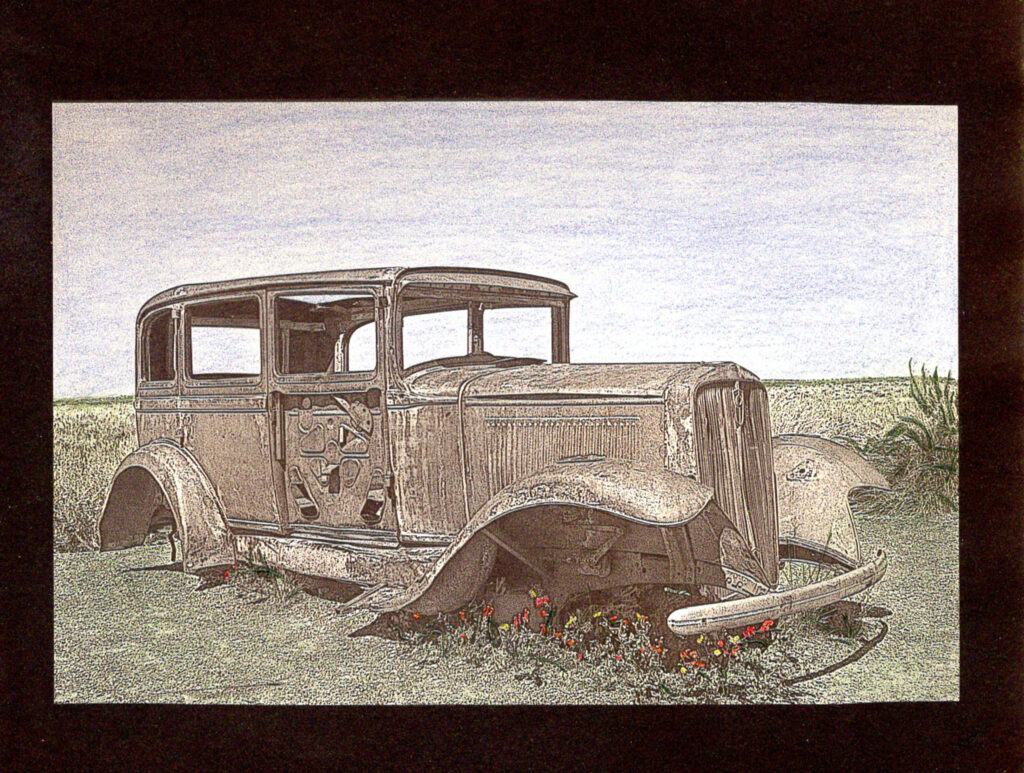
After reluctantly moving from analog to digital photography, she felt something was missing in her photography. Eventually, Ana immersed herself in historic photographic processes, particularly hand colored Cyanotype and Van Dyke prints which she believes is a better way to present her images.


2026 Open Studio Tours Info
Studio Info
Purchase Info
Cash or credit card only
Friday
Special Activities?
Throughout the day. I will be demonstrating the hand coloring process I use on my Van Dyke prints.
Limited Edition VanDyke and Cyanotype work, and digital prints, both framed or matted only, will be available, along with individually printed notecards.
VanDyke prints are a historical non-camera photographic contact printing process. It was patented in Germany in 1895 by Arndt and Troost and was named after Flemish painter Sir Anthony van Dyke (1750-1825) due to his use of rich brown colors in his work.
The process is based on UV light, using either UV light bulbs or sunshine, that causes a change in a light sensitive emulsion brushed onto paper or other substrates. Creating each print requires 7 steps in the darkroom.
My first step is to create a B&W negative to make the prints. In the darkroom, the paper is coated with a light sensitive silver-based solution, making sure the paper is evenly covered. After the paper dries, the negative and the sensitized paper are pressed together under glass and exposed to UV light. The finished prints can be hand
colored using colored pencils or watercolor.
The process for Cyanotype prints is similar but uses a different light sensitive emulsion.
Saturday
Special Activities?
Throughout the day I will be demonstrating the hand coloring process I use on my Van Dyke prints.
Limited Edition VanDyke and Cyanotype work, and digital prints, both framed or matted only, will be available, along with individually printed notecards.
VanDyke prints are a historical non-camera photographic contact printing process. It was patented in Germany in 1895 by Arndt and Troost and was named after Flemish painter Sir Anthony van Dyke (1750-1825) due to his use of rich brown colors in his work.
The process is based on UV light, using either UV light bulbs or sunshine, that causes a change in a light sensitive emulsion brushed onto paper or other substrates. Creating each print requires 7 steps in the darkroom.
My first step is to create a B&W negative to make the prints. In the darkroom, the paper is coated with a light sensitive silver-based solution, making sure the paper is evenly covered. After the paper dries, the negative and the sensitized paper are pressed together under glass and exposed to UV light. The finished prints can be hand
colored using colored pencils or watercolor.
The process for Cyanotype prints is similar but uses a different light sensitive emulsion.
Sunday
Special Activities?
Throughout the day I will be demonstrating the hand coloring process I use on my Van Dyke prints.
Limited Edition VanDyke and Cyanotype work, and digital prints, both framed or matted only, will be available, along with individually printed notecards.
VanDyke prints are a historical non-camera photographic contact printing process. It was patented in Germany in 1895 by Arndt and Troost and was named after Flemish painter Sir Anthony van Dyke (1750-1825) due to his use of rich brown colors in his work.
The process is based on UV light, using either UV light bulbs or sunshine, that causes a change in a light sensitive emulsion brushed onto paper or other substrates. Creating each print requires 7 steps in the darkroom.
My first step is to create a B&W negative to make the prints. In the darkroom, the paper is coated with a light sensitive silver-based solution, making sure the paper is evenly covered. After the paper dries, the negative and the sensitized paper are pressed together under glass and exposed to UV light. The finished prints can be hand
colored using colored pencils or watercolor.
The process for Cyanotype prints is similar but uses a different light sensitive emulsion.
Misc

entrance from 14th Street

ALG


